Housing data politics in the United States: Inequitable open data, informal networks, and strategic neutrality
Research Themes
Tags
Publication
Journal of Urban Affairs
Authors

Abstract
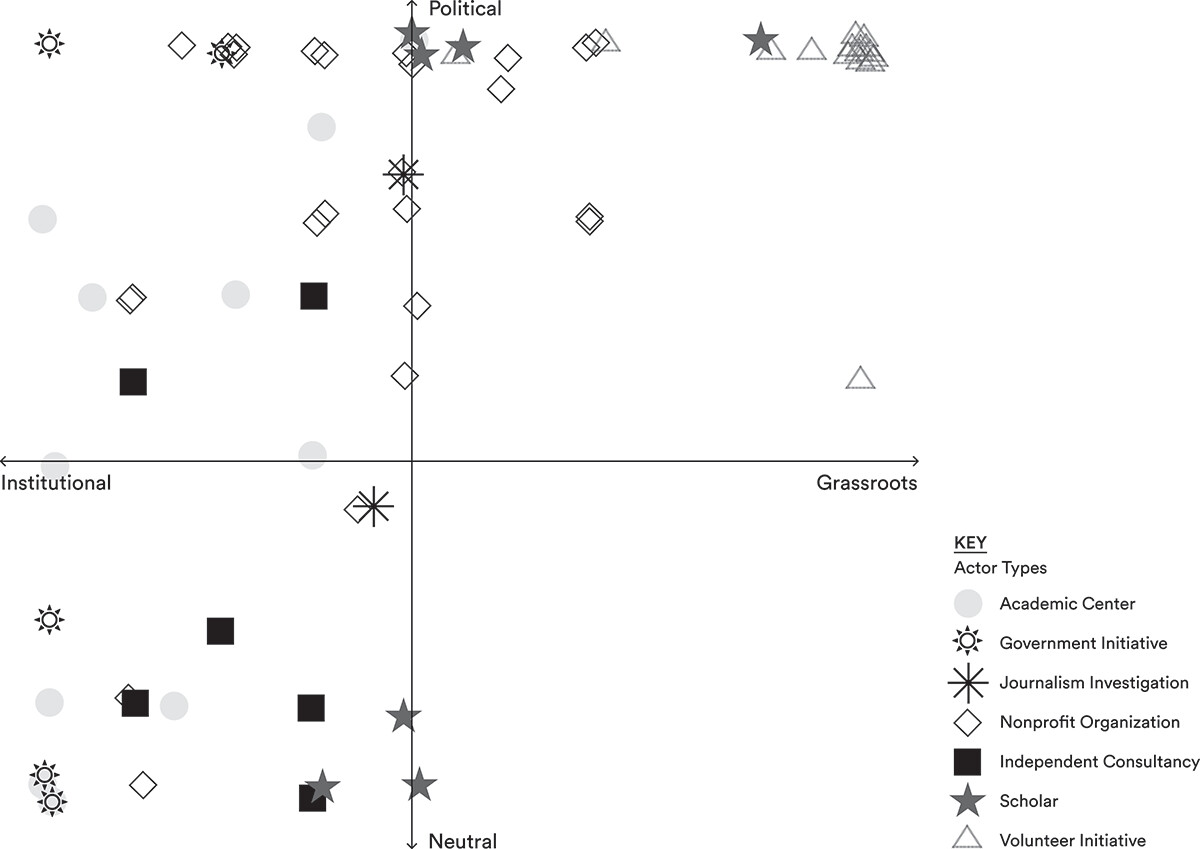
Open housing data—property transactions, eviction filings, 311 complaints, and rental registries—have been a crucial resource for policymaking and real estate professionals. Meanwhile, housing data actors increasingly collect, analyze, and use data to address housing inequality, including efforts related to eviction prevention and land use reform, among others. This paper examines the motivations and practices of grassroots and institutional housing data actors. From a field scan of 67 entities engaged in housing data work across 12 U.S. states and 18 municipalities, we conducted 18 in-depth interviews to explore how housing data actors operate, their political goals, and data processes.
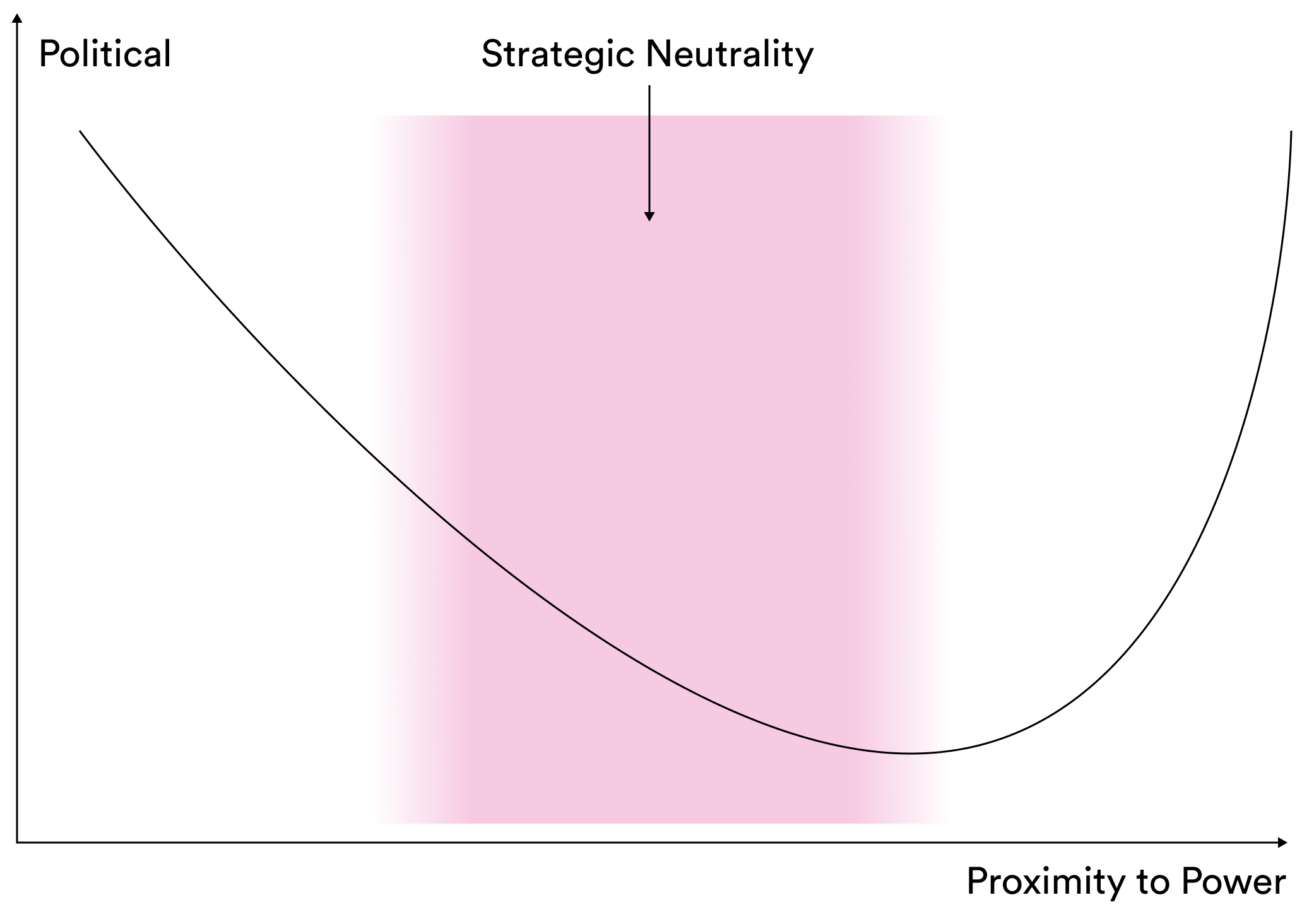
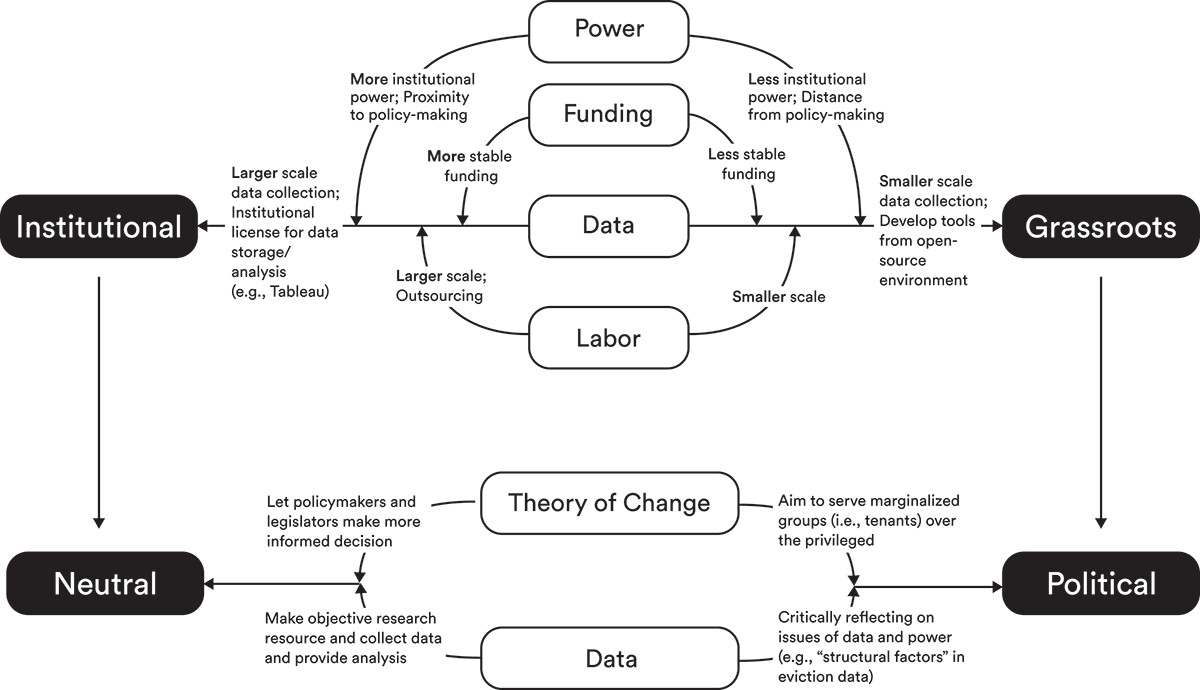
We put forward a two‑axis framework that positions housing data actors according to their organizational structure (institutional/grassroots) and their stated data ideology (neutral/political). This framework contributes to understanding how different actors navigate complex issues such as embedded power dynamics and ethics in housing data. This two-axis view supplies a vocabulary for tracing how normative commitments and material constraints shape housing data pipelines and, ultimately, housing outcomes across the broader housing information ecosystem.
Images